
Firmable, VP of the Americas, Chester Thompson’s Exclusive Interview with MarTech Pulse on Account Intelligence
Stay updated with us
Sign up for our newsletter
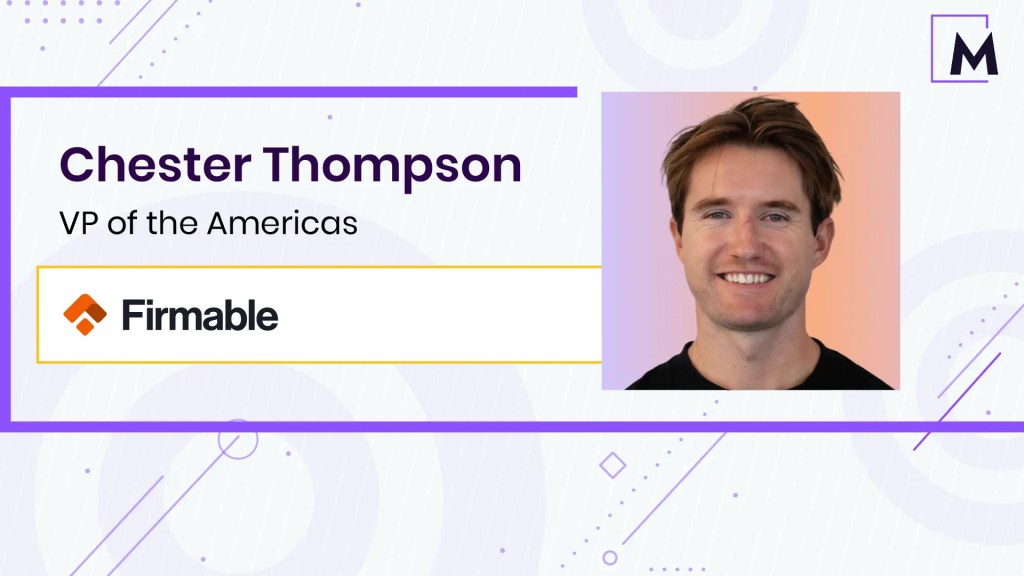
In an exclusive interview with MarTech Pulse, Chester Thompson, VP for the Americas at Firmable, discusses why martech stacks need more context rather than more data, how technology signals become conversations buyers want, who owns AI agent mistakes, and how marketing and sales teams in the US and Canada can share account intelligence to build pipeline.
Chester, you moved from sales operations at Eftsure to leading Firmable’s sales, then to San Francisco. What did operations teach you about data that leadership later confirmed or overturned?
Operations taught me that data is only as good as the decision it supports. When you run sales ops, you see every crack in the system: duplicate accounts, contacts who left the company a year ago, territories built on firmographics nobody had checked. My job was to make the CRM trustworthy enough that reps, and the marketers feeding it leads, would actually rely on it.
Leadership confirmed most of that. Bad data shows up everywhere downstream. Campaigns target people who left months ago. Reps quietly give up on the CRM and build their own spreadsheets.
Leadership overturned my belief that clean data was the finish line. In ops, I thought if every field was accurate, the job was done. Running a sales team showed me that a perfectly accurate record can still be useless if it doesn’t tell a rep why this account matters right now. Accuracy gets you into the room. Context gets you the conversation.
Moving to San Francisco sharpened that further. US buyers are flooded with outreach from every channel, so the bar for relevance is higher. A rep who shows up with accurate data and nothing to say is just another email to delete.
Firmable’s research found sellers believe a third of CRM data is flawed, and most lose 10%-plus of selling time to it. What separates data worth attention from noise?
Those numbers don’t surprise anyone who has carried a quota. When sellers believe a third of what’s in front of them is wrong, they hesitate on all of it. That’s where the lost selling time really comes from. Reps fix the bad records, then double-check the good ones too.
I use three tests to separate signal from noise. First, is it current? Data needs to be date-stamped so a rep knows whether a job change or a technology install happened last week or two years ago. Undated data forces people to guess, and guessing is slow.
Second, is it specific to this account? Generic firmographics like industry and headcount help you build a list. They don’t help you start a conversation. Data earns attention when it says something about this company that its peers don’t share.
Third, does it change what the rep does next? If a piece of data doesn’t change who you target, what you say or when you say it, it’s noise, however accurate it is.
Most teams have far more data than they need, and far less that passes all three tests. Adding fields, or another tool to the stack, won’t close that gap. Fewer, better data points that sellers and marketers can trust without checking will.
Read More – How AI Data Exploration Uncovers Hidden Patterns in Customer Data
You’ve said US and Canadian teams lack context, not data. If spotting VMware proves presence but not urgency, what turns that detection into a conversation a buyer wants?
Knowing a company likely runs VMware tells you they’re a fit. It doesn’t tell you they care this quarter. Thousands of companies run VMware happily and have no reason to take your call.
Urgency comes from layering signals. Is the company hiring infrastructure engineers with cloud migration in the job description? Did they just bring in a new CIO? Are they adopting adjacent technologies that suggest the stack is being rethought? Did a licensing or pricing change land on them recently? One detection is a fact. Three or four connected signals are a story.
That story is what buyers respond to, whether it reaches them as a rep’s email or an ABM campaign. A message that says “I see you use VMware” invites a delete. A message that says “you’re hiring for a cloud platform team, and your new CIO came from a business that moved off on-prem, so here’s how similar companies handled the transition” shows you did the work.
This is why we built Firmable’s Tech Intelligence around deep scans, at vast scale, of public-facing infrastructure, then connected that to hiring, leadership and company change. The detection matters. The context around it gives a seller, or a campaign, a reason to reach out and a buyer a reason to reply.
Your September research found only 14% of sellers say agents could act on their data as-is, and half expect blame for agent mistakes. Who owns accountability when AI directs selling?
The leader who deploys the agent owns the outcome. Not the rep, and not the vendor.
That 14% figure tells you sellers know the data isn’t ready. The fact that half expect to be blamed anyway tells you something worse: many organizations are rolling out agents without deciding who answers for them. If a rep didn’t choose the data, design the workflow or approve the message, they can’t fairly carry the blame when it goes wrong.
In practice, accountability should be split by what each person controls. RevOps and marketing ops own data quality and the rules an agent follows. Sales and marketing leaders own what agents are allowed to do, from which accounts they touch to what they can say and when a human must step in. Reps own the judgment calls the agent hands back to them.
The biggest mistake I see is treating an agent like a junior rep who’ll learn on the job. A junior rep notices when a record looks wrong and asks a question. An agent acts on what it’s given, confidently and at scale. So build the guardrails before launch. Waiting for the first bad email to land in a customer’s inbox is too late.
When leaders own that upfront, reps stop fearing the tool and start using it.
Read More – Account-Based Marketing: Strategy, Execution and ROI for B2B Teams
As Firmable expands across the US and Canada, what must change in how marketing and sales share account intelligence, technology context and buying signals before AI agents can act credibly?
Right now, most teams run two versions of the truth. Marketing sees intent and engagement across its martech stack. Sales sees contacts, notes and opportunities in the CRM. Technology context often sits in a third tool that only a few people check. Each team acts on part of the picture and assumes the other team has the rest.
Humans can paper over that gap. A rep can ping a marketer and ask why an account suddenly went hot. An agent can’t. It acts on whatever system it’s connected to, so if the context is fragmented, the agent’s actions will be too.
Start with one shared account view. Firmographics, technology context, hiring and leadership changes, and engagement belong together on the account record, where both teams and their tools can see them. Then agree on what a buying signal actually is. If marketing counts a whitepaper download and sales counts a new VP of IT, the agent will chase both and convince no one. So decide which combinations of signals justify action, and write them down. And measure marketing and sales on pipeline from the same accounts. That way neither side has a reason to hoard context.
The US and Canada make this more urgent. These are large markets with long lists of potential accounts, so teams lean on automation earlier. If the shared foundation isn’t there, agents just scale the confusion faster.
Make a prediction we can revisit in November 2028: which part of today’s prospecting stack, whether static lists, intent feeds or standalone technographics, becomes obsolete once agents act?
Static lists go first. By November 2028, I expect exporting a list of accounts once a quarter and working it top to bottom will look the way cold-calling from a printed directory looks today.
A static list is a snapshot. The moment you export it, it starts going stale. People change jobs, companies raise money or cut costs, and technology gets swapped out. A human rep could live with that because they checked each account before calling. An agent working a static list will act on whatever was true on export day, at a scale where small errors become big ones.
Standalone technographics come next. Knowing a company likely runs a particular tool will still matter, but on its own it’s a fit signal, not a reason to act. Technology data will survive as one input inside a live account view, alongside hiring, leadership change and engagement. The standalone product, a spreadsheet of installs with no surrounding context, won’t.
Intent feeds will survive longest, because so much marketing targeting is built around them. But they’ll have to change. On their own they tell you someone is researching a topic, often without telling you who or why. Agents need intent that’s tied to a specific account and backed by other evidence before they act on it.
What replaces all three is a continuously updated account view that an agent can query in the moment: who this company is today, what it’s likely running, what’s changing and who’s involved. Lists won’t be built and then worked. They’ll be generated for each action, at the moment of action.
Read More – The Rise of Autonomous Decision-Making in Marketing Platforms
What should CROs, CMOs and RevOps leaders stop assuming about data, signals and AI before their next planning cycle, and what practical principle should replace that assumption?
I’d ask them to drop three assumptions.
The first is that more data means better decisions. Planning cycles often start with a request for more coverage, whether that’s more contacts or another feed plugged into the martech stack. But our research shows sellers already distrust a big share of what they have. Adding volume on top of distrust just adds checking time. The principle that should replace it: buy and keep only the data your team will act on, and make sure every record shows when it was last verified.
The second is that a signal is a reason to reach out. A single signal, whether it’s a website visit, a technology detection or a funding round, is a prompt to look closer. It isn’t permission to send a sequence. Buyers in the US and Canada can tell when they’ve been triggered by one data point, and it erodes trust in the brand. The replacement principle: act on a combination of signals that together explain why now, and train both people and agents to wait for that combination.
The third is that AI will fix the data. I hear this a lot. Leaders expect that once agents are in place, they’ll clean up the CRM as they go. In reality, agents inherit whatever is there and act on it faster. When only 14% of sellers think their data is ready for agents, the problem is readiness. Another tool won’t solve it. The replacement principle: fix the foundation first, then automate. Decide what good data looks like, who owns it, and what an agent is allowed to do with it, before the agent goes live.
Underneath all three is one idea. Treat data as a product your team uses every day. Products have owners, quality standards and feedback loops. A line item you renew once a year has none of those. When leaders plan this way, AI amplifies good habits instead of bad ones.
Your quota research found 62% of reps blame how targets are set, and 44% want AI finding the best leads. Could better account intelligence ease that pressure, or raise quotas?
Honestly, both, and leaders should be upfront about that.
Start with why 62% of reps blame how targets are set. Most quotas are built top-down from a revenue number, then split across territories using historical performance and headcount. What they rarely account for is the real opportunity inside each territory. Two reps can have the same number while one patch is full of companies actively changing their stack and the other is full of companies that renewed everything last year. The rep feels the difference every day. The plan doesn’t.
Better account intelligence can fix that. When you can see which accounts are showing real change, such as new leadership, hiring in relevant teams, or technology that’s likely due for review, you can size territories and quotas on opportunity, not just history. It also lets marketing put campaign budget behind the same accounts reps are working. That makes targets feel fairer, and fairness matters as much as the number itself.
The 44% who want AI finding the best leads are asking for the same thing from another angle. They want to spend their time on accounts that can actually buy. Reps who stop losing hours to bad data and dead-end accounts will close more.
And yes, when reps close more, quotas will go up. That’s how every productivity gain in sales has played out. The question is whether the increase is earned. If leaders raise quotas because the tools got better, without fixing territory design or data quality, they’ll burn out good people. If they raise quotas because each rep now has a clearer, richer patch to work, reps will usually accept it.
My advice to leaders is simple. Use account intelligence to set targets before you use it to justify bigger ones. Show reps the opportunity behind the number. When people can see why a target makes sense, they stop arguing with it and start working toward it.
Write to us [editorial@demandmediaagency.com] to learn more about our exclusive editorial packages and programmes.
Chester Thompson is VP of the Americas at Firmable, where he leads the company’s setup and growth in the US and Canada from San Francisco. He previously ran sales operations at Eftsure before leading sales at Firmable. Chester holds a Bachelor of Commerce in Finance and International Business.
Firmable is an AI-native B2B sales intelligence platform that helps sales and marketing teams find, prioritize and engage the right accounts. It combines company and people data with technology context and buying signals across 13 markets, including the US, Canada, and Asia Pacific.