
CTM, Co-Founder & CEO, Todd Fisher’s Exclusive Interview with MarTech Pulse on Conversation Analytics
Stay updated with us
Sign up for our newsletter
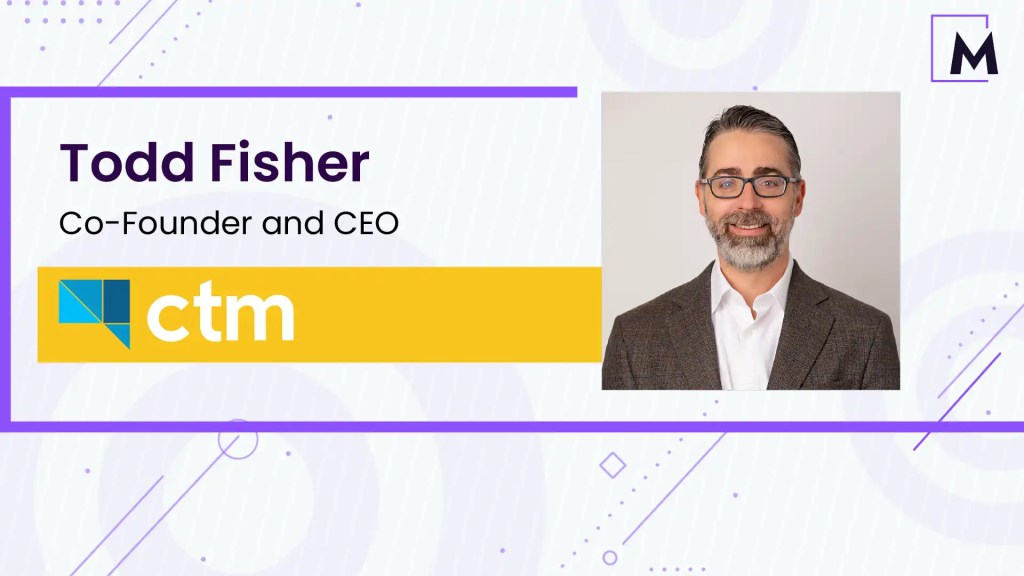
You co-founded CTM with your wife Laure in your basement, built the software yourself, and grew it to serve over 30,000 businesses globally – without outside investors. What was the one early technical problem you solved that convinced you this could be a real company?
The problem we kept hearing from every client, across every industry, was the same: They couldn’t connect their phone calls to their paid ads. That gap was costing them real money; budget was going to campaigns they couldn’t prove were working. When we solved that reliably and watched a client’s attribution data transform overnight, we knew the demand was there. Every business running paid ads and taking phone calls has this problem. That’s more than just a niche. That’s a company.
You’ve held the rare dual role of both CEO and the primary technical architect at CTM for over a decade. How does staying hands-on with the engineering give you an edge in understanding what marketers truly need from conversation analytics platforms today?
Staying close to customers is the job, and everything else is infrastructure. I’ve made it a personal discipline to keep those conversations going at every stage of the company, because the moment you stop hearing directly from the people using your product, you start optimizing for the wrong things. The technical involvement helps me translate what I’m hearing into something the team can act on quickly. But the insight always starts with the customer, not the codebase.
CTM’s new integrations with Google LSA, LinkedIn Ads, Reddit Ads, and Genius Monkey aim to close the attribution gap between ad spend and actual customer conversations. Which of these four integrations is solving the most painful blind spot marketers have been struggling with the longest?
All the integrations solve the same core attribution gap, but the “most painful blindspot” depends largely on a customer’s industry and where they’re spending their marketing dollars. For local service, legal, and home services businesses, Google LSA has historically been the biggest challenge to connect to real revenue. For B2B marketers, it’s LinkedIn Ads where clicks and engagement rarely map cleanly to sales conversations; Reddit Ads and Genius Monkey have had a longstanding issue of limited visibility once a prospect leaves the platform. Our integrations meet our customers where they are and closes all the same gaps by tying ad engagement directly back to actual customer conversations and outcomes.
With the LinkedIn Conversions API integration now attributing phone calls and SMS conversations back to specific campaigns, how does connecting these offline outcomes to online ad spend fundamentally change how marketers should think about ROI from LinkedIn?
LinkedIn has always been a platform where marketers intuited value but struggled to prove it, especially for high-consideration, phone-heavy sales cycles. When a campaign drives a call that converts to revenue three weeks later, traditional attribution never captures that. The Conversions API integration means those offline moments get tied back to the campaign, the audience segment, even the creative. Now marketers can optimize LinkedIn spend the way they’ve always wanted to, based on what actually closed, not just what was clicked.
Industry data shows that traditional attribution models are increasingly unreliable in 2026 due to privacy changes, iOS restrictions, and zero-click search behavior. How is CTM’s conversation-layer approach able to capture conversion signals that pixel-based tracking simply can’t see anymore?
Traditional attribution relies heavily on signals like cookies, pixels, device IDs, and click paths, all of which are becoming less reliable due to privacy changes, iOS restrictions, and zero-click search. While those signals still have value, they only tell part of the story.
A pixel can show that someone clicked an ad or visited a landing page, but it cannot tell you whether they called, started a chat, asked a buying question, or booked an appointment.
That is where CTM’s conversation-layer approach stands out. CTM captures the moment when digital interest turns into a real customer conversation, surfacing signals that clicks alone miss, like customer intent, inquiry quality, lead qualification, and appointment outcomes.
This gives marketers a clearer view of what is actually driving revenue. Put simply, pixels show interest. CTM shows whether that interest turned into meaningful business results.
CTM’s VoiceAI and AskAI tools are reportedly cutting call handling time by 50% for early adopters. At what point does AI-powered conversation intelligence stop being a productivity tool and start becoming the primary source of truth for marketing budget decisions?
It’s already happening for our most sophisticated users. The inflection point comes when teams realize the conversation data, not the ad platform data, is the most reliable signal they have. Ad platforms are self-reporting their own performance. Your conversations are ground truth. When AI can surface which moments in a call correlate with closed revenue, which campaigns are driving the highest-intent callers, and which messages are landing (and do it at scale across thousands of calls), that goes beyond being a reporting feature and starts being the engine your decisions run on.
As agentic AI and programmatic advertising continue evolving in the second half of 2026, where do you see the biggest convergence between real-time conversation data, ad platform signals, and automated campaign optimization – and is any platform close to cracking that fully?
The convergence we’re building toward at CTM is a unified view of the customer journey, where conversation data, ad platform signals, and campaign performance live in one place rather than disconnected systems. The modern customer journey is so much more than just tracking phone calls, and focusing on that played a large part of why we rebranded to CTM. The four integrations are a step in that direction: connecting impression-level data, offline conversions, and call activity back to the platforms running the spend.
What’s still missing is a trust layer. Marketers need confidence that the AI is producing genuine revenue outcomes, not proxy metrics that look good in a dashboard. The platform that solves the trust and transparency problem alongside the technical one will win.
For marketers and martech builders trying to build better attribution stacks today, what’s the single most common and costly mistake you see teams make when trying to connect their paid media spend to actual revenue outcomes – and how do they fix it?
The most costly mistake is chasing the competitive set instead of listening to customers. Especially in today’s tech landscape, teams make a roadmap and budget decisions based solely on what a competitor just shipped rather than what their own customers are actually asking for. It’s a losing strategy because you’re always a step behind, and you’re optimizing for someone else’s vision of the market.
Laure and I made a deliberate choice early on to stay close to our customers and let that drive what we built. That means sometimes we’re not first. Being first doesn’t matter nearly as much as getting it right and building something that actually solves the problem in front of you rather than the problem your competitor decided to solve. The teams that build the best attribution stacks are the ones constantly talking to the people using them, not the ones with the longest list of feature checkboxes.
Write to us [wasim.a@demandmediaagency.com] to learn more about our exclusive editorial packages and programmes.
Todd Fisher is co-founder and CEO of CTM. Todd founded the business in 2012 with his wife, Laure, in their basement and together have grown it into a Inc. 500-rated,top-ranked call management platform serving over 30,000 businesses around the world. Todd developed the initial software and as the CEO he continues to be the driving technical force of the company. Prior to CTM, Todd co-founded SimoSoftware before selling it to RevolutionHealth in 2005. In 2009, Todd helped co-found Captico LLC, providing online software solutions for small businesses looking to accelerate their marketing and online presence.
Since joining HilltopAds, she has played a central role in developing the company’s operational infrastructure. Starting from the ground up, Rimma built the QA department into a highly effective team responsible for traffic quality, fraud prevention, and continuous platform monitoring. Over the years, her responsibilities have expanded alongside the company’s growth, and today she oversees operational strategy with a strong focus on quality, efficiency, and long-term client success.
CTM is a global conversation analytics leader, trusted by over 100,000 users worldwide, including top brands like The Washington Post, Morgan and Morgan, Terminix, and ServiceMaster. The platform empowers businesses to track and attribute online and offline leads, facilitating data-driven decision-making and bolstering ROI.
With seamless integrations with industry titans such as Google Ads, HubSpot, Salesforce, and Facebook, CTM consistently earns acclaim from software authorities like Gartner, Software Reviews, and G2. Renowned for its growth and innovation, CTM equips marketers with AI-powered tools—including features like AskAI and VoiceAI—to deliver smarter insights, streamline lead management, and elevate customer engagement