
LeanData, CMO, Jim Bell’s Exclusive Interview with MarTech Pulse on GTM Orchestration
Stay updated with us
Sign up for our newsletter
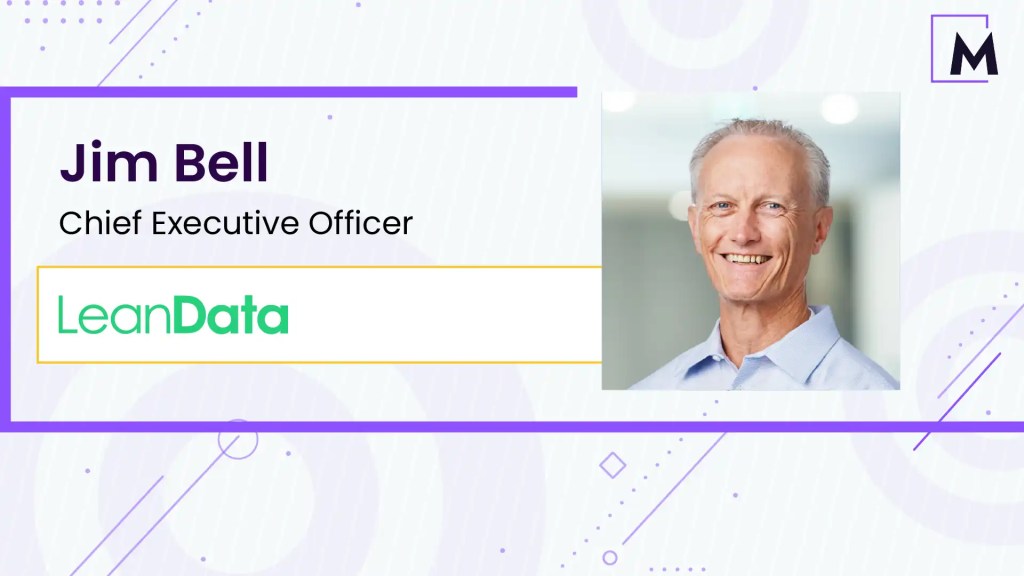
In an exclusive interview with MarTech Pulse, Jim Bell discusses GTM Orchestration, AI readiness, data quality, buying groups, and how businesses can align sales and marketing to drive revenue growth.
Jim, you were a LeanData customer long before becoming CMO. How does that experience inform your current role?
I believe customer understanding is at the heart of being a good CMO. When I first came across LeanData as a customer, it solved a clear problem for my team and proved its value very quickly. I was able to experience first-hand how LeanData improved our data quality and allowed my team to spend more time prospecting and less time trying to match an inbound lead to the right account or merge duplicate records in our CRM. My team got back a lot of time to focus on connecting with prospective customers rather than trying to triage leads coming through the website. That outside-in experience was the seed of eventually deciding to join LeanData. Like many of our customers, I’ve used the platform at more than one company in my career.
I watched as the platform evolved to encompass cross-GTM orchestration and became an indispensable solution for GTM Operations. Eventually, I was excited for the opportunity to become CMO and merge that earlier outside-in customer perspective with my inside-out perspective to help share our story. And that story is informed by my own customer empathy and lived experience, to really be able to describe all the ways it’s helped my teams.
GTM orchestration has evolved significantly as companies rethink how their marketing, sales, and customer success teams work together. How is orchestration expanding across the revenue lifecycle, and what role does LeanData play?
The integration among marketing, sales, and customer success has been challenging forever, and part of what LeanData has always delivered is the ability to work across teams and systems that are siloed. AI acting in GTM organizations only adds fuel to the ongoing challenge of integration across a fragmented, siloed GTM technology stack.
GTM orchestration evolved out of revenue orchestration, recognizing that the buyer expects a unified experience, driving the need for connection across all the go-to-market teams. Challenges that LeanData solved early on in the customer acquisition space—reducing friction and streamlining handoffs between sales and marketing—now apply across the full revenue cycle.
We definitely help with a lot of use cases around customer acquisition, including inbound lead management, ABM, buying group motions, and the like. In addition, more and more of our customers are applying GTM orchestration capabilities beyond customer acquisition: managing onboarding, customer retention, and expansion of existing accounts.
Your recently announced AI research shows GTM teams are rapidly scaling AI agents while confidence in their underlying data remains low. Why does AI make longstanding data-quality problems even more urgent?
Our research revealed that concerns about data quality are by far the top challenge for GTM professionals when it comes to deploying AI. More than half of those surveyed—55%—cite data quality as their number-one AI challenge. And when AI initiatives stall, 45% blame bad data, not the AI model.
Data quality isn’t a new problem, but AI amplifies any underlying data issues. Organizational mandates are accelerating AI rollout even though there are foundational weaknesses in data quality.
In the past, a human SDR might notice a discrepancy in account names or duplications of contacts, or hear something about rep assignments in a conversation over lunch, and investigate the problem. But an AI agent can act only on the data you give it, and it will act confidently and decisively on bad records as easily as on clean ones, without noticing anomalies. The result could be handoff errors, customer experience mistakes, and hidden revenue leakage.
Beyond data quality, what does an AI-ready GTM infrastructure require?
There’s a big gap today in GTM teams between AI adoption and AI readiness. Our research found that although more than 90% of GTM professionals surveyed have deployed at least one AI agent, only 31% say their GTM infrastructure is fully ready for AI transformation.
GTM infrastructure AI readiness requires 1) Clean data, 2) Clear workflows, covering ownership, triggers, required actions, exceptions and edge cases, 3) Crisp context across the entire revenue lifecycle, so that agents and humans across marketing, sales, customer success, and partners all know what everyone else is doing with an account or customer.
As B2B companies move from MQL-based motions toward buying groups, what changes in how sales and marketing work together? What did your customer Palo Alto Networks demonstrate when they started using buying groups?
Traditionally, organizations have used an MQL process to decide what goes to sales, with the technology and measurement centering on individual leads.
But that’s not how organizations buy. They don’t buy as discrete individuals but have always bought through buying committees. The best sales reps have always engaged all the individuals involved in a purchase process, not just a single champion. The challenge is scaling what the best reps do to help entire GTM teams improve.
As an example, LeanData helped Palo Alto Networks double their win rates by transitioning from a MQL-based process to a buying group motion. They recognized that GTM teams have over-indexed on the MQL and the lead as the unit of measurement and the main trigger for everything. Sales reps are far more efficient (and effective) if they’re working on an opportunity with an engaged buying group than if they are working with a single lead.
We give companies much more context on the buying group, so they can move forward with a lot more momentum and completeness of context. We actually find and track buying group member engagement across marketing and sales through our Journey object. What does that buying group look like? How engaged are they? Our customers are able to move from passing lead to sales to passing an engaged buying group. So that’s why a company like Palo Alto Networks sees such an incredible increase in win rates, a dollar-value acceleration of deals. It’s because they’re not wasting time focusing on the wrong leads or in an MQL motion.
How should RevOps leaders evaluate the business value of GTM orchestration, and what kinds of measurable improvements should they look for?
You need to know where the value comes from. We have plenty of customers who share their ROI with LeanData, so we can help identify and estimate the value.
Sometimes it’s about speed, sometimes it’s about win rate, sometimes it’s about deal size with buying groups. There are a lot of different ways you can measure and improve ROI.
One common source of value is “speed to lead” and decreasing the friction in that process that can allow your competitor to connect with an active buyer before you do. If a team can more quickly match a lead to the right account, get it to the right salesperson, and respond faster, they’ll see ROI through deal velocity and improved conversion rates.
Enforcing service-level agreements for the people following up on leads is another way to increase revenue. Reducing lead leakage through SLA adherence means they can run that through their funnel model more efficiently.
Here are a couple of specific examples from our customers. Using LeanData, Uber for Business increased its deal velocity by 68%, shrinking its average sales cycle from 78 days to 25 days. Korn Ferry’s speed to lead went from 15 minutes to five minutes. Some have gone from days to minutes. It’s really remarkable, but there’s a definite improvement in win rates.
Your research found that 83% of GTM leaders consider strategy very important, yet only 38% say their execution is highly effective. What’s behind that execution gap, and how can companies achieve better alignment between sales and marketing?
There’s definitely an execution gap. Strategy is important, but too often it falls down in execution. Our research with Harvard Business Review Analytic Services showed that only 32% of GTM teams feel like they have very good sales and marketing alignment.
Sales and marketing have always been built up as separate organizations, with separate leaders and processes. Marketing automation systems and tools are all built on helping marketing get more MQLs. That’s been the goal, and everything on the marketing side is optimized for that. On the sales side, you’re talking about qualification, managing opportunities, coaching your reps, and closing deals. That whole industry has built up around optimizing the seller’s time and their effectiveness in closing deals once they get to the opportunity stage.
But those two worlds don’t integrate very well, partly because they’re owned by different teams. Across this divide are gaps and leakages. Marketing says, “Sales doesn’t follow up on our leads”, and sales says, “Marketing doesn’t give us good leads.” Then they both go on with their lives and accept it as just the way things are.
That’s where LeanData comes in to try to pull those things together. Where we’re unique, and where our customers tell us they appreciate our value, is that within that GTM tech stack, we operate on both sides of the wall between sales and marketing, running processes across the two teams. And increasingly, companies are also including customer renewals and expansion in this view, applying GTM across the entire revenue lifecycle,
LeanData is one of the few technologies that spans across the gap. Even very large enterprises are realizing it’s not OK to let marketing do its thing, hand it off to sales, and then walk away. It must be a joint motion that’s owned by both sides. LeanData is focused on the signals all the way from first lead to marketing-qualified lead to buying group to opportunity to close, and beyond.
As AI makes it easier to build software, how should GTM leaders decide what to build versus buy—and what risks are easiest to underestimate?
AI forces companies to re-evaluate both their existing software and planned purchases. We hear from customers that they’re all wrestling with the decision about whether to use AI to build their GTM tools, or to buy them from established vendors like LeanData.
The first question to ask is whether a capability is truly a competitive differentiator. If it is, maybe it makes sense to build it, because then it’s going to be different. On the other hand, if it’s something that isn’t a core capability or competitive differentiator, it may make more sense to buy it from a specialized vendor.
Consider the question of domain expertise. Does the expertise to build the technology already exist in-house? Is it on par with the expertise and understanding of a vendor that’s dedicated to that tool or capability? Are the people excited to build it also excited to maintain it & enhance it?
Here’s a really interesting data point. Some of the largest enterprises in the world, including frontier AI companies, still use LeanData. They don’t build their own versions of GTM orchestration, for a few reasons.
First, the go-to-market process is highly complex. Lots of different sales teams and solutions and processes run through it, from when a lead hits the website all the way through existing customer relationships and service cases. It’s a huge, complex thing to try to build. A company might have wonderful developers and amazing AI models, but they probably don’t have a decade plus of understanding all the ins and outs of the way people build GTM processes. The level of detail involved is staggering, edge cases abound, and it’s simply not well understood by anyone who doesn’t literally do this for a living.
Another consideration is a biggie: This GTM stuff is mission-critical. It has to work. If you have leaks in that system—whether from bad data, undocumented processes, or lack of coordination among your various GTM teams—you lose revenue.
In the end, it doesn’t matter where a company is in their AI transformation journey, or how proficient they are with their AI agents. The most important priority is to focus on the GTM foundation. Make sure you’re AI ready: good-quality data, business processes that are documented and not just in someone’s head, and a clear understanding of the context of what’s happening within and around your prospects and customers.
With any technology, you first need to understand what is the process you’re trying to run? What’s the objective? What are the outcomes you’re looking for? Because you can’t adequately assess a third-party technology or what it would take to build it unless you’re really clear on that. Too often, people tend to look only at what we call the happy path of that process. If everything goes perfectly, it goes here to here to here to here. But the part that people often miss is, what are all the ways, all the corner cases where that thing can go sideways? And if it goes sideways silently, you could have a significant revenue leak without even knowing it.
Write to us [editorial@demandmediaagency.com] to learn more about our exclusive editorial packages and programmes.
Jim Bell leads global marketing efforts at LeanData. He brings more than 20 years of experience leading growth in technology companies. Prior to LeanData, Jim was CMO at Torch Leadership Labs as well as Glint, where he led marketing for over six years from its inception through the company’s acquisition by LinkedIn.
LeanData provides the backbone for AI-ready go-to-market infrastructure. More than 1,000 leading B2B companies and a community of 5,000-plus OpsStars rely on LeanData to fuel efficient growth by aligning marketing, sales and customer service execution with the entire AI-enabled customer journey. LeanData’s Intelligent GTM Orchestration platform acts as the connective tissue across the revenue lifecycle, integrating and normalizing buyer data, automating signal-driven workflows and delivering AI-powered insights. LeanData is a 2027 Salesforce Partner of the Year Award for Customer Value and a #1 G2 Crowd Provider.