
InboxAlly, COO, Eric Jenkins’ Exclusive Interview with MarTech Pulse on Email Deliverability
Stay updated with us
Sign up for our newsletter
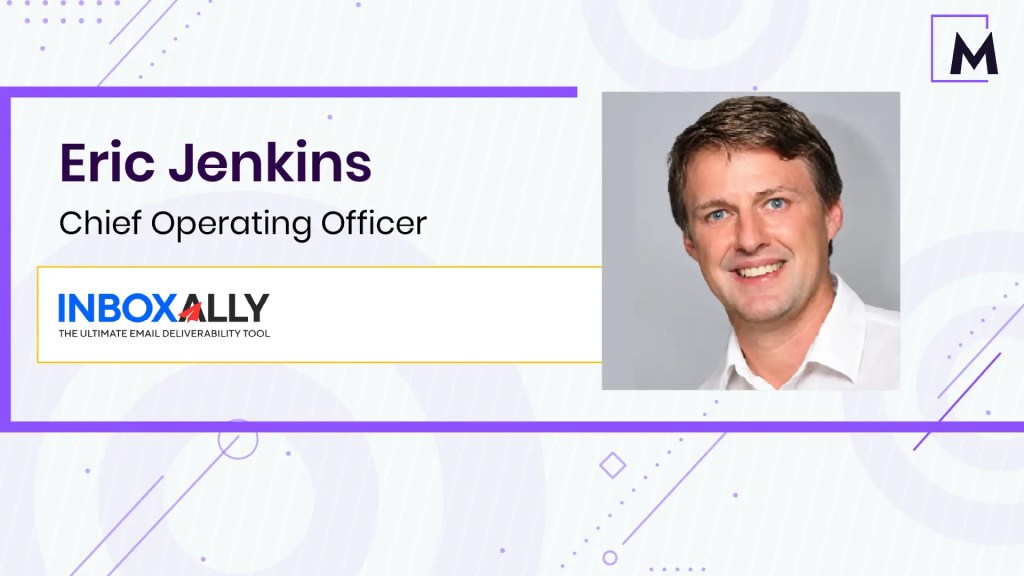
In an exclusive interview with MarTech Pulse, Eric Jenkins discusses Email Deliverability, sender reputation, inbox placement, Gmail AI, email engagement, and the future of data-driven email marketing.
Your career moved from telecommunications at Intel to machine-learning engines making billions of daily decisions. What did operating at that scale teach you about leading products and operations today?
At that scale, you learn pretty quickly that small problems can become expensive problems. You also learn that you can’t have someone watching every decision. You need good visibility into what’s happening, clear ownership, and a way to intervene when something starts going wrong.
That carries over into how I think about InboxAlly. When we build a feature, I want to understand how we’ll know it’s working, what happens when it doesn’t, and how much work it creates for the customer and our team. Something can look great in a demo and still be difficult to operate every day.
I also want the team to be able to make decisions without everything coming through me. That gets much easier when we agree on what we’re measuring and what a good outcome looks like.
Mailbox providers rely on machine-learning models that senders never see. Having built large-scale decision engines, how should marketers think about a system they can’t inspect and can influence only indirectly?
I’d be careful about anyone who claims to know exactly how those models work. Having built decision engines, I know how much can be going on behind an outcome that looks simple from the outside.
You can still make progress without knowing every detail. Start with the things you control: who you send to, how often you send, whether your authentication is correct, and how recipients respond.
Then look at the results by provider. If Gmail placement drops while Microsoft stays steady, that gives you somewhere to investigate. Make a deliberate change and give yourself a chance to see its effect. Changing five things at once makes it very difficult to learn anything.
The other piece is measuring placement. A message being accepted by the receiving server doesn’t tell you whether someone will find it in their inbox.
InboxAlly’s announcement said 21% of legitimate marketing emails never reach the inbox. When results slip, what do marketers mistake for a content problem that’s really a reputation problem?
The subject line tends to get blamed first. Then the template, the offer, or a particular word in the email. Those are things the marketing team can easily change, so it’s understandable that they start there.
But I’d first ask whether the audience is actually seeing the message. If several campaigns suddenly perform worse at Gmail, rewriting all of them probably isn’t the best first move.
I’d look at what changed around the same time. Did sending volume jump? Was a new audience added? Did the sending infrastructure change? Are complaints increasing?
None of those observations proves it’s a reputation issue, but they help narrow it down. You want to establish where the problem is before spending a week fixing the wrong thing.
Gmail’s Postmaster Tools is moving toward more actionable feedback, including whether recipients interact with a sender’s mail. What does that shift reveal about how mailbox providers define trustworthy senders?
My read is that providers are trying to make the feedback more useful. A reputation score can tell you something is wrong and still leave you wondering what to do about it. Feedback about how recipients respond gives you a more concrete place to start.
For a marketer, low complaints are encouraging, but I wouldn’t stop there. I’d also want to understand whether people still have a reason to receive the email and whether the frequency makes sense.
That doesn’t mean everyone who misses a few emails should come off your list. Different businesses have different buying cycles. It means you should have a deliberate approach to inactive subscribers, instead of continuing to mail them indefinitely because their addresses are still in the database.
Some practitioners argue mailbox providers increasingly discount engagement that doesn’t come from a sender’s real audience. Where do you draw the line between building reputation and masking deeper problems?
I think it’s a fair question. We should be able to explain what engagement can help with and where its limits are. I also wouldn’t claim we know exactly how each provider weighs every type of engagement.
There are legitimate businesses whose emails end up in spam, including messages their customers asked to receive. Helping those senders improve placement is the problem we’re working on.
But engagement has to sit alongside the rest of the work. If there’s an authentication issue, fix it. If a list source is producing complaints, address it. If the sending volume is too aggressive, adjust it.
I’d judge the result over time. Is placement improving, and is the business reaching its audience more effectively? If the underlying problems remain and the customer needs constant intervention, there’s more work to do.
As you lead the Enterprise-ready program, what do large organizations demand from a deliverability platform that smaller senders rarely consider, and how is that shaping your product direction?
With a large organization, you have several teams evaluating you for different reasons. Marketing wants better results. Security wants to understand access and data handling. Legal and procurement want clear commitments. Engineering wants to know how much work it will take to fit you into their environment.
You have to be prepared for all of those conversations. That includes questions about single sign-on, permissions, retention, support, and how customer data is handled by any AI features.
Operationally, they may have multiple brands, domains, and teams. They need visibility across those accounts without turning the platform into another full-time job.
That’s how I think about the Enterprise-ready work: making InboxAlly easier to approve, integrate, and manage at scale. Customers have already invested heavily in their email platforms. We want to help them get more out of that investment.
With Gmail’s AI Inbox prioritizing messages by inferred relationships, delivery may no longer guarantee attention. How do you expect AI assistants to redefine inbox placement over the next few years?
I think we’re going to see more distance between an email reaching the inbox and the person actually seeing it. An assistant may summarize it, pull out an action, or decide something else deserves attention first.
That could change how marketers evaluate a campaign. Someone might get the information they need from a summary without ever opening the original message. We’ll have to understand those interactions before deciding that a lower open rate means a worse result.
My expectation is that being useful and recognizable to the recipient will matter even more. I’d also make the purpose of the message easy to understand, whether a person or an assistant reads it.
It’s still early. I wouldn’t pretend we already have a complete playbook for optimizing email for AI assistants.
If you could retire one assumption that marketers and technology leaders still build email programs around, what would it be, and what should replace it as ecosystems grow more data-driven?
The assumption that sending more email will reliably produce more revenue.
I understand why teams do it. There’s a revenue target, there’s a large list, and sending another campaign feels like a relatively inexpensive way to close the gap. But there can be a cost to repeatedly sending to people who aren’t interested, and that cost may show up later.
I’d want the team to understand which audiences are producing results, how often it makes sense to contact them, and whether we’re maintaining our ability to reach them.
List growth still matters. So does reaching new customers. But I’d evaluate that growth alongside placement, conversions, complaints, and longer-term customer value. The goal is to build an email program that keeps producing results.
Write to us [wasim.a@demandmediaagency.com] to learn more about our exclusive editorial packages and programmes.
Eric Jenkins is Chief Operating Officer of InboxAlly, where he leads product and operations for the platform that helps brands get their email into the inbox. He sets the company’s product direction and heads its Enterprise-ready program, which makes InboxAlly ready for the security, scale and compliance needs of large organizations.
Eric has spent more than 30 years leading technology teams in ad tech, streaming media, healthcare and telecommunications. Along the way he built machine learning engines that make billions of decisions a day. He started his career in telecommunications at Intel. He holds a B.S. and an M.S. in electrical engineering from Lehigh University and Stevens Institute of Technology.
At InboxAlly, Eric puts that experience to work for customers, using data to show them how mailbox providers see their email and what it takes to reach the inbox.
Outside of work, Eric is usually tuning his home espresso setup, walking his goldendoodle or planning the family’s next adventure trip.
At InboxAlly we engage with your emails to teach inbox providers not to send your emails to the spam folder and promotions tab and direct them into the primary inbox. These interactions literally teach inbox providers not to send your email to the spam or the promotions folder. Winner of the 2025 Sammy – Sales and Marketing Awards, presented by the Business Intelligence Group in the category of Growth Catalyst – Email for outstanding performance.