
Highspot CEO Robert Wahbe’s Exclusive Interview with MarTech Pulse on Deal Agent
Stay updated with us
Sign up for our newsletter
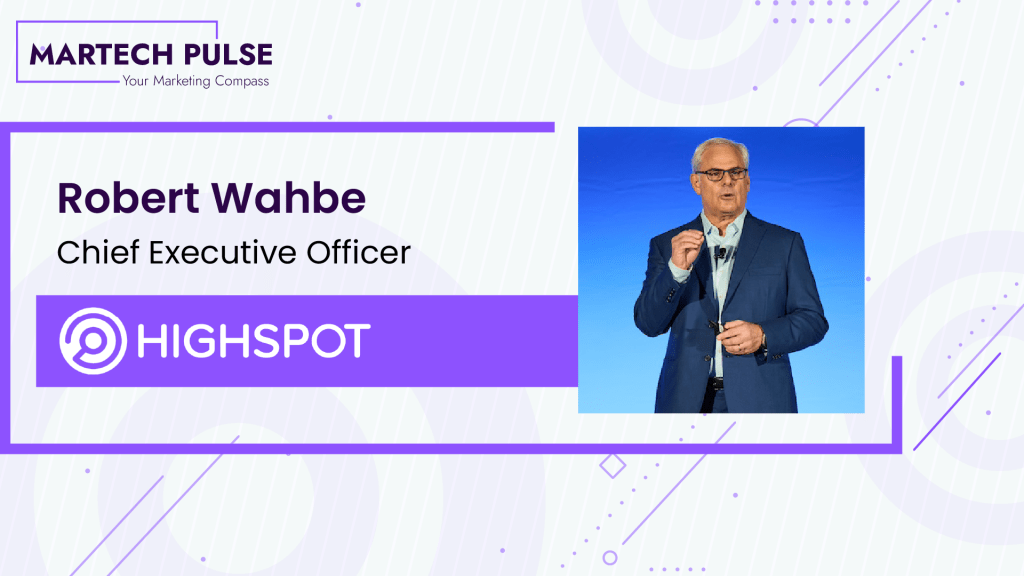
Robert Wahbe explains why fragmented deal data is the real revenue bottleneck, how platforms like Deal Agent and Nexus™ shift teams from reactive analysis to real-time execution, and what revenue leaders must change in 2026.
Deal Agent analyzes CRM, buyer engagement, and meeting insights. What’s the wake-up call for revenue leaders on fragmented deal data today?
Most teams do not actually have bad salespeople. What they have is an execution visibility problem. Sellers are doing working across CRM, meetings, content, and buyer interactions, but those signals are fragmented and disconnected in the moment it matters most.
The real impact of AI is not helping leaders analyze deals after the fact. It is helping salespeople know what to do next while the deal is still alive. When sellers can see risk early, understand buyer engagement, and get guidance in the flow of work, performance improves naturally. That shift from fragmented hindsight to in-the-moment execution is where AI starts to matter.
GTM teams juggle Salesforce, Slack, meetings, and coaching separately. How should Nexus™’s unified approach flip revenue leaders’ tech priorities in 2026?
In 2026, the priority shouldn’t be adding more tools. Instead, focus on reducing the distance between insight and action. Nexus™ flips the model by treating data, content, coaching, and execution as one system, not separate workflows.
The question leaders should ask isn’t, “Do we have the right tools?” It’s, “Can our teams act on what they know without slowing down?” Unified platforms win because they make execution easier, not because they surface more dashboards.
Read More: How Salesforce’s 80,000 Employees Are Saving Up to 20 Hours a Week With Slackbot
What’s your dead-simple playbook for rolling out AI Role Play, skill assessments, and automated feedback across a 50+ person sales team in 60 days?
No two teams are the same. So, I’ll focus on what we believe works for most teams, recognizing that results will vary based on culture, maturity, and leadership.
The most consistent approach is to start with moments that already exist. Do not introduce AI as a new initiative. Embed it into current rhythms like onboarding, deal reviews, and manager coaching. Use AI Role Play on real deals, not hypothetical scenarios. Use skill assessments to focus coaching, not to score people. Let automated feedback handle the basics so managers can spend time where human judgment adds value. Adoption follows when AI removes friction instead of adding it.
Complex buying groups are the new battleground. What are the top 3 deal execution mistakes you’re seeing, and their fastest fixes with Deal Agent?
The first mistake is underestimating how quickly deals lose alignment. Fix that by surfacing risk early and keeping next steps explicit.
The second is relying on a single champion. Fix that by tracking engagement across the buying group and adjusting outreach in real time.
The third is waiting too long to coach. Fix that by triggering coaching in the flow of the deal, not after it stalls.
Execution breaks in small moments. AI helps teams catch those moments before they compound.
Digital Sales Rooms with mutual action plans now drive deal velocity. Which 2 underrated tactics help teams cut sales cycles 20%+ while keeping buyers aligned?
We know every organization is different. That said, we do see patterns that work in many go-to-market teams.
The first is making mutual action plans truly mutual. When buyers co-own next steps, see progress clearly, and understand how decisions connect to outcomes, momentum improves. The second is reducing friction between meetings. Digital Sales Rooms are most effective when they become the single source of truth for the deal, not just another place to upload files. Velocity improves when alignment is visible and easy to maintain.
Read More: Bloomreach CEO Raj De Datta’s Exclusive Interview with MarTech Pulse on AI Personalization
Which 3 revenue metrics should leaders obsess over daily with Highspot, and which 2 vanity stats can they finally ignore?
Leaders should focus on deal velocity trends, buyer engagement across the group, and execution consistency, meaning, are teams doing what works. In all instances, cohorts – comparing groups to identify the differences that are creating success, or lack thereof, so you can scale what works – are key to driving consistent performance across teams.
The two stats they can stop obsessing over are activity volume and content views in isolation. Activity doesn’t equal progress, and views don’t equal impact unless they move the deal forward.
Beyond Winter ’26, where is the GTM market heading? What emerging problems will reshape revenue enablement in 2027?
We’re seeing is a shift toward recognizing that all go-to-market strategy lives and dies in the deal. Strategy, marketing, enablement, sales, RevOps, all of it only matters if it shows up when a buyer is making a decision.
The next phase of enablement is about delivering guidance inside the deal, not around it. AI integrated into your GTM can make that possible by connecting insight directly to action in real time. In the year-plus to come, the teams that win will not be the ones with the most AI features, but the ones that use AI to create confidence, consistency, and better execution in the moments that actually determine outcomes.
Thank you, Mr.Robert Wahbe, for taking the time to share your insights with us.
Write to us [wasim.a@demandmediaagency.com] to learn more about our exclusive editorial packages and programmes.
Robert is Highspot’s co-founder and CEO, leading our mission to transform the way millions of people work. Prior to founding Highspot in 2012, Robert spent more than 15 years as Corporate Vice President of the Server and Tools Division at Microsoft. A veteran entrepreneur, he also co-founded Colusa, a cross-language virtual machine that was acquired by Microsoft in 1996.
Highspot is the only agentic GTM Performance Platform, powered by Nexus™, our unified AI and analytics engine. Highspot connects strategy, execution, and outcomes by transforming every signal — spoken, shared, or shown — into real-time actions tailored to each role. With Highspot, your sellers execute better in every deal, your marketers double down on what performs, and your enablement teams scale what works. Because when your people perform at their best, your business does too.