FreeCast, Founder & CEO, William Mobley’s Exclusive Interview with MarTech Pulse on Local Advertising
Stay updated with us
Sign up for our newsletter
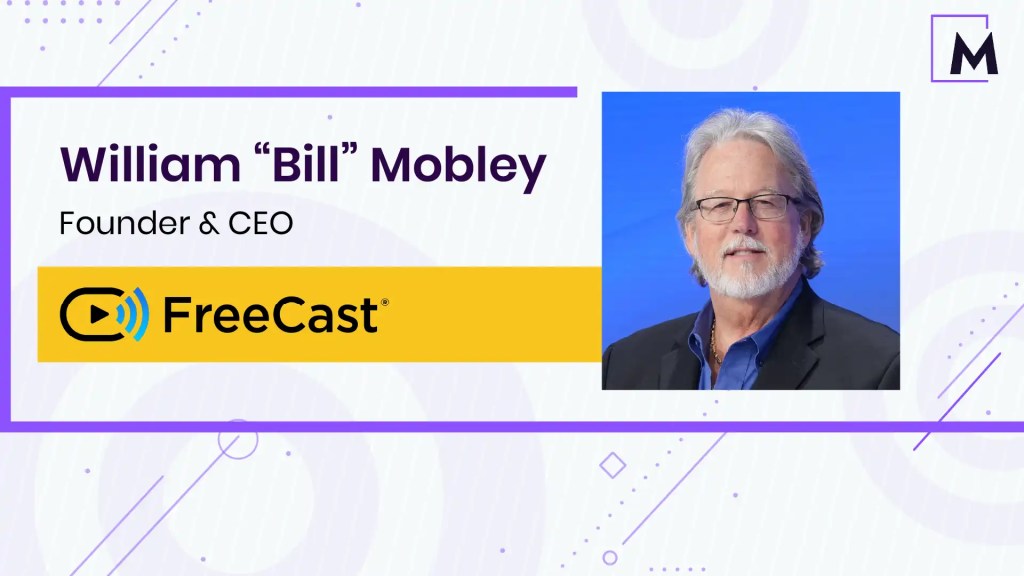
In an exclusive interview with MarTech Pulse, William “Bill” Mobley discusses Local Advertising, connected TV, FreeCast Cities, Zer0Gap, audience targeting, and the future of streaming monetization.
Bill, you’ve founded and led several ventures, from MegaMedia Networks to Nextelligence to FreeCast. What have those experiences taught you about scaling a company through changing media landscapes?
The biggest lesson is that technology changes much faster than consumer behavior. Consumers have always wanted essentially the same things: convenience, choice, simplicity and value. What changes is the infrastructure used to deliver those things.
I’ve had the opportunity to work through several generations of digital media, from the early days of internet television to streaming, connected TV and now an environment where virtually every broadband, wireless and satellite connection can become a media distribution point.
What I’ve learned is that successful companies can’t simply chase the next device or application. You have to identify where the industry is going and build infrastructure that can survive multiple technology cycles.
That’s an important part of how we’ve approached FreeCast. We don’t view FreeCast as another streaming service competing to acquire a library of programming and then convincing consumers to buy another subscription. We built a platform designed to organize and monetize the increasingly fragmented media ecosystem.
Scaling in media ultimately comes down to being positioned where the transactions occur, discovery, subscriptions, advertising and commerce, regardless of how the consumer happens to connect.
FreeCast recently highlighted its push into the local advertising market across all 210 U.S. Designated Market Areas. What convinced you this was the right moment to go after that opportunity at scale?
Several major trends are converging at the same time.
Consumers have rapidly migrated toward streaming, while local advertising has historically been organized around television stations, cable systems and geographic markets. At the same time, connected television has created an opportunity to combine the visual impact of television advertising with many of the targeting and measurement capabilities advertisers have become accustomed to online.
We believe the missing piece is infrastructure that connects those worlds efficiently at the local-market level.
Our 210-DMA strategy is about creating that infrastructure. Instead of treating streaming audiences as one enormous national audience, FreeCast Cities gives us the ability to organize media, viewers and advertising opportunities around actual local markets.
That matters because the overwhelming majority of businesses are not national advertisers. They are restaurants, automobile dealers, healthcare providers, real estate companies, universities, professional services firms and thousands of other businesses trying to reach customers within a specific geographic footprint.
Streaming shouldn’t eliminate local television advertising. It should make local television advertising dramatically more addressable.
At the center of this strategy is Zer0Gap™. For advertisers used to buying campaigns across dozens of disconnected streaming apps, how does Zer0Gap change what a local ad buy actually looks like?
The problem we’re addressing is fragmentation.
Today, an advertiser may have consumers watching programming across FAST channels, streaming applications, connected TVs, mobile devices and other digital environments. Reaching those viewers can require multiple platforms, buying relationships and reporting systems.
Our objective with Zer0Gap is to make that environment easier to transact against.
Instead of starting with the question, “Which individual streaming app should I buy?” We want advertisers to be able to start with a much more familiar question: “Who am I trying to reach, where are they, and what is the most efficient way to reach them?”
For a local advertiser, that could mean defining a geographic market, audience parameters and campaign objectives and then delivering advertising across eligible inventory available through FreeCast’s ecosystem.
That changes the conversation from buying individual applications to buying audiences.
And because FreeCast operates as a platform rather than a single content channel, our long-term opportunity is to create advertising infrastructure that can extend across multiple content sources, distribution partners and devices.
FreeCast Cities takes a different approach than launching another standalone streaming app. Can you walk us through how it aggregates free, premium, and subscription streaming into one local destination for viewers?
The average consumer doesn’t need another streaming app. They need somebody to organize the streaming apps and content they already have.
That’s the philosophy behind FreeCast Cities.
Think of it as a digital media hub organized around your city. A consumer can discover free streaming channels and programming, access available local content, find premium programming and manage additional subscription services through a more unified experience.
The goal is simplicity: one starting point for television rather than repeatedly searching across disconnected applications.
The business significance is equally important.
Once you become the place where consumers discover what to watch, you create opportunities around advertising, subscription transactions, commerce and other services.
That’s why we describe FreeCast as a Platform-as-a-Service company rather than simply another streaming service. The same technology can ultimately be deployed by telecommunications companies, ISPs, municipalities, utilities, property operators and other distribution partners under their own brands.
FreeCast Cities demonstrates what that media and transaction layer can look like at the local-market level.
Local ad measurement has historically relied on estimated ratings. What kind of audience, geographic, and device-level insight can connected TV realistically give local advertisers that broadcast never could?
Traditional television was extraordinarily powerful at building awareness, but historically much of its measurement depended upon estimating audiences from representative samples.
Connected television changes the underlying measurement model because digital systems can generate direct signals from actual viewing and advertising activity, subject of course to applicable privacy requirements, permissions and the capabilities of each distribution environment.
That can provide advertisers with much more actionable information: where an impression was delivered, what type of device received it, when it was delivered, how frequently advertising was served and, in certain environments, whether there was a measurable action associated with the campaign.
For a local advertiser, geography is particularly powerful.
A business may not care about reaching millions of households nationally. It may care about reaching potential customers within its DMA, city or appropriate service area.
Connected television allows television advertising to begin behaving more like digital advertising while preserving the sight, sound and motion that make television such a powerful medium.
I think that’s one of the most significant changes occurring in local media.
Looking ahead to 2026 and 2027, how do you expect local advertisers’ relationship with streaming to evolve, and where do you see FreeCast’s role in that shift?
I think we’re moving toward the point where advertisers stop thinking about “television” and “streaming” as two separate categories.
The consumer has already stopped making that distinction. They’re simply watching television.
The advertising infrastructure now has to catch up.
Over the next several years, I expect local advertisers will increasingly demand the same things from television that they expect from other digital media: geographic precision, audience targeting, measurable delivery, flexible budgets and better attribution.
But they don’t want to manage twenty different platforms to accomplish it.
That’s where we believe FreeCast can play an important role.
We’re building a media monetization layer that can sit above different forms of connectivity and content distribution. Whether the household ultimately connects through fiber, cable broadband, fixed wireless, mobile or satellite is increasingly secondary. The economic opportunity begins after that connection is established.
FreeCast’s role is to help organize that media experience and create monetization opportunities around the time consumers spend watching, discovering, subscribing and interacting with content.
For local business owners and regional advertisers still finding their footing in streaming, what’s one piece of advice you’d give them as they plan next year’s media mix?
Don’t think of streaming as another advertising channel you have to learn. Think of it as television becoming measurable.
Start with the same questions you’ve always asked: Who is my customer? Where do they live? What am I trying to get them to do? What is that customer worth to my business?
Then use streaming technology to answer those questions more precisely.
I also wouldn’t abandon traditional media simply because something new has arrived. The smartest strategies will combine the reach and storytelling power of television with the targeting, measurement and accountability of digital advertising.
The winners in local advertising won’t necessarily be the companies spending the most money. They’ll be the companies that become better at connecting advertising exposure to actual business outcomes.
That’s ultimately what technology should do: make advertising simpler, more measurable and more economically accountable.
Write to us [wasim.a@demandmediaagency.com] to learn more about our exclusive editorial packages and programmes.
William “Bill” Mobley is the Founder and Chief Executive Officer of FreeCast Inc., a media technology company developing a Platform-as-a-Service ecosystem designed to aggregate, organize, distribute and monetize streaming media across consumer and enterprise environments.
Mobley has spent much of his career developing businesses around the convergence of television, internet technology, digital commerce and media distribution. His experience spans multiple generations of the digital media industry, beginning with early internet television initiatives and evolving through streaming aggregation, connected television, advertising technology and enterprise media platforms.
As founder of MegaMedia Networks and MegaChannels.com during the early development of internet-delivered television, Mobley was involved in building digital media experiences well before streaming became a mainstream consumer category. His subsequent ventures, including Nextelligence, continued his focus on technologies designed to simplify digital content distribution and commerce.
At FreeCast, Mobley has led the company’s evolution from a consumer streaming aggregation business toward an enterprise Platform-as-a-Service model. FreeCast’s technology is designed to allow telecommunications providers, ISPs, wireless companies, utilities, municipalities, property operators and other organizations to provide branded media experiences without having to build an entire streaming ecosystem themselves.
Mobley’s broader strategy centers on what he describes as the “media monetization layer” above connectivity, the opportunity to generate advertising, subscription and transaction revenue after a consumer connects to broadband, wireless or other communications infrastructure.
Under that strategy, FreeCast continues developing technologies spanning streaming discovery, subscription management, payments, connected-TV advertising, local-market media aggregation and white-label media distribution.
FreeCast Inc. is a media technology company providing a Platform-as-a-Service designed to help consumers and distribution partners aggregate, manage, discover and monetize streaming media.
Rather than operating solely as another standalone subscription streaming service, FreeCast’s platform is designed to bring together free, ad-supported and premium entertainment within a unified media experience. Its technology supports content discovery, subscription management, payments, advertising monetization and white-label distribution across connected televisions, mobile devices and web-based environments.
FreeCast’s enterprise strategy is designed to enable telecommunications providers, ISPs, wireless providers, utilities, municipalities, property operators and other organizations to offer branded media and entertainment experiences to their customers while creating additional opportunities for advertising, subscription and transaction revenue.
Through initiatives including FreeCast Cities and its Zer0Gap advertising technology, FreeCast is developing infrastructure intended to connect streaming audiences, content providers, distribution partners and advertisers across local and broader markets.