The Rise of the AI-Integrated Marketing Team: Collaboration, Content, and Commerce
Stay updated with us
Sign up for our newsletter
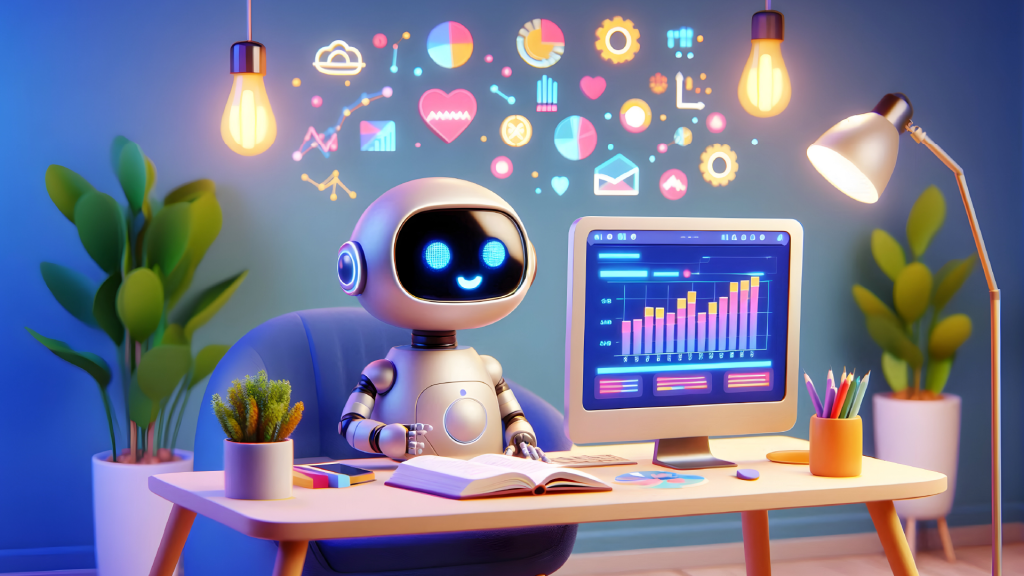
Marketing in 2025 is not a situation of manual creativity, fragmented tools, or departmental silos. It is an intelligent ecosystem where man and machine act together in generating ideas, executing, and optimizing campaigns at a speed and precision that is totally unheard of before.
Today’s modern marketing team is being reshaped by three innovative capabilities: AI-powered content generation, AI-driven marketing collaboration, and agentic marketing. Together, they represent the operating model where creativity, coordination, and decision-making are the joint domains of humans and intelligent machines.
The e-commerce and enterprise brands’ race to make the most out of the AI-integrated marketing team marks a very crucial point in the whole marketing saga. The new paradigm is a mix of automation, creativity, and autonomy that makes it possible to operate faster, be more data-driven, and infinitely adaptable.
1. From Manual to Machine-Enhanced: The Core of AI-Powered Content Generation
In today’s highly competitive environment, content is the engagement and sales-driving force. However, its production is a costly affair as it needs to be done consistently, and that too in different formats and for various audiences. This is where an AI-powered content generation platform is a necessity.
The latest AI content creation tools and generative AI for marketing are software giving teams the power to double their creative output, and at the same time maintain quality as well as the original flavor of their creativity. Thanks to intelligent content automation, the marketers are now able to get the copy, visuals, and even video variants that resonate with brand voice and tone while dynamically adapting to audience data.
Read More: How AI-Driven Merchandising Is Redefining Product Discovery in Online Stores
Practical Use Cases
- Accelerated Copy Creation: AI writing platforms for marketers produce everything from social captions to long-form blogs in minutes, which allows the creatives to focus on the strategic thinking part of the process.
- Workflow Streamlining: AI tools for content workflow in an enterprise shorten the time taken for the campaigns to reach the audience due to machines taking over non-creative tasks such as formatting, localization, and SEO optimization.
- Personalization at Scale: Content generators are utilizing customer data so that the tone, price, and visuals can be modified to the liking of the customer, making each interaction a personalized one.
Strategic Impact
The team is gradually changing its role from being solely content producers to being the creative directors of machine-generated ideas. Instead of creating each asset, marketers are the ones to set up systems that will keep on producing and optimizing better over time.
Thus, content speed goes up along with quality being the same, which is a major change that permits brands to test, learn, and iterate faster than ever.
2. Breaking Silos Through AI-Driven Marketing Collaboration
While marketing teams are making smarter content, the real downside of marketing is still the way that people in the different departments communicate. The need for cross-departmental coordination between creative, analytics, media, and product teams can result in a longer lead time for campaigns and less flexibility. This is why AI-driven marketing collaboration is going to be one of the key features of the marketing organization in 2025 and beyond.
AI-powered marketing automation and collaboration tools bring together the team’s efforts in campaign planning, asset approval, and performance monitoring. The work not only gets centralized through these platforms but also gets improved by the intelligent features embedded in them.
What Collaboration Looks Like Now
- Smarter Campaign Planning: AI-assisted campaign planning tools apply predictive analytics to suggest target audience categories, content versions, and budget distribution.
- Unified Workspaces: With the help of AI-powered marketing teamwork, the integration of messaging, task management, and asset review is done in a single interface. The so-called collaborative marketing platforms make this possible.
- Performance Optimization: At each stage of the data movement between the team, AI is known to offer a real-time feedback loop, changing departments to suggest new timings or even coming up with ideas that can boost results.
Benefits Of Using Autonomous Marketing Agents In Campaigns
In large firms, AI-driven marketing collaboration for B2B and enterprise teams does away with the slow communication channels that were the chief causes of the delayed campaigns. AI helps the creatives, analysts, and operations teams to coordinate well, as they all have access to the same updated data and recommendations at every moment.
Boosting marketing productivity with AI-driven collaboration software allows departments to juggle fewer tasks and communicate more smoothly. Moreover, it encourages artistic collaboration by letting the machine partners take the role of the mediator in the feedback loop, discussion summarizer, and key insight highlighting.
Thus, collaboration is becoming the common thread rather than a sequentially ordered process. Marketing groups transform into flexible, integrated ecosystems, where the flow of ideas is faster, the process of getting approval is quicker, and the implementation is done instantly.
3. From Data to Decisions: How AI Turns Marketing Insight Into Action
The next evolution in the decision-making process is already here; AI-driven marketing collaboration is being accepted by the marketing teams. Now the smart platforms are not merely taking care of analytics but are interpreting, forecasting, and acting on them. These AI marketing assistants are showing live campaign data, spotting irregularities, and even giving suggestions for the next move. Using AI-powered marketing strategies and AI-driven marketing automation, organizations have the power to switch creative resources or alter audience segments’ precision.
The way marketers work is changing from using dashboards to getting dynamic insights where every click, comment, and conversion becomes a decision trigger. The loop that feedback creates is a very effective one, and it connects content, collaboration, and conversion into one big intelligent system, turning classical marketing analytics into predictive, self- execution.
Read More: How Shop Analytics Tools Reveal the Hidden Drivers of E-Commerce Growth
4. From Automation to Autonomy: The Emergence of Agentic Marketing
Agentic marketing refers to a novel phase in which smart machines do not just assist the teams but also run, optimize, and scale the campaigns on their own. Through agentic AI marketing tools and AI-powered marketing automation, the marketers are no longer restricted to planning and overseeing the execution of digital agents that carry out their specific tasks, be it budget allocation, audience testing, or creative optimization. Such changes are making marketing departments into self-organizing learning networks of coexistence among human and artificial intelligence.
How Agentic Systems Operate
Suppose you set a campaign goal, let’s say, a 15% hike in conversions, and your AI marketing assistants are able to design, experiment, and optimize all the campaign components without any help until the goal is achieved. That is what is meant by autonomous campaign management.
These systems are always collecting data from various sources, doing micro-experiments, and altering the creative side or the amount spent without waiting for human input.
Advantages and Competitive Edge
- Speed and Scale: Agents can simultaneously execute hundreds of variants of the same campaign, performing real-time tweaks to them.
- Precision: They leverage detailed performance data to initiate immediate adjustments in targeting, messaging, and timing.
- Efficiency: Less time for the teams in dealing with logistics, and spend more time on defining strategy and storytelling.
How Agentic AI Is Transforming Marketing Automation
More and more marketers are now adopting agentic AI tools for personalized marketing to create contextually aware experiences. AI-driven marketing strategies nowadays use autonomous systems for managing budgets, testing creative variants, and faster deployment of personalized assets than humans could possibly handle.
Future trends in agentic marketing and AI integration predict that in two years, the majority of enterprise brands will be supported by numerous specialized marketing agents collaborating with each other, with each one assigned a distinct operational layer. This change is literally the last piece of the marketing puzzle, incorporating AI autonomy that becomes inseparable from human intent.
5. Inside the AI-Integrated Marketing Team
The merging of AI-powered content generation, AI-driven marketing collaboration, and agentic marketing has led to the complete restructuring of marketing organizations.
A 2025 Team Blueprint
- Marketing Director (Strategic Oversight): Establishes aims, sets KPIs, and guarantees human control over self-sufficient systems.
- AI Workflow Architect: Maps out the interconnection of generative and agentic systems within the marketing stack.
- Creative & Prompt Lead: Controls AI content creation tools, assuring that the output is consistent with the brand’s tone and meets the compliance standards.
- Collaboration Manager: Manages AI-powered platforms for collaborative marketing campaigns and ensures integration of data from different functions.
- Agent Governance Officer: Keeps an eye on proper use, openness, and data management of agentic AI marketing tools.
- Data and Insights Lead: Studies performance indicators and improves AI models with the aim of constant development.
The New Workflow in Action
The campaign objective is stipulated, for instance, to introduce a new product line for Gen Z customers, with 25% more engagement than usual.
- The AI-powered content generation tools for enterprise marketing team create thousands of different and creative variants in various formats.
- The collaboration platform gets to use AI-assisted campaign planning to come up with the most suitable audience segments and the perfect time to launch.
- Self-sufficient systems carry out, test, and optimize the campaigns across all channels automatically.
- People watch for anomalies, fine-tune prompts, and give strategic direction.
This team is a lively, seamless ecosystem where human ingenuity dictates the direction, and AI performs, multiplies, and learns.
6. Benefits of the AI-Integrated Approach
Increased Speed and Agility
The integration of AI-powered content generation with AI-driven marketing collaboration allows teams to run campaigns at a speed that is 3 to 5 times greater. Weekly performance reviews are replaced by real-time changes, thus providing agility in changing markets.
Creativeness at Scale
Generative instruments allow the brand quality to be preserved even when there are thousands of content variations. Marketers can benefit from AI-powered writing platforms with increased consistency, faster iteration, and wider personalization reach.
Teamwork Simplified
The shared insights enabled by AI among various departments make AI-powered marketing teamwork a second-nature activity. Teams do not have to pursue updates or approvals anymore because intelligent systems dispense the right information at the right time.
Self-Optimizing
Through AI-powered marketing strategies and autonomous campaign management, agentic systems continuously test hypotheses and refine campaigns, creating self-improving marketing loops.
Enhanced Human Focus
The integration of automation and autonomy allows human marketers to refocus on creativity, brand storytelling, and strategic innovation in areas where human judgment remains irreplaceable.
7. Challenges and Ethical Considerations
On one hand, the integration of AI is a powerful transformation, but on the other hand, it also poses challenges that require marketers and their leaders to be very cautious when navigating through them.
- Data Privacy and Security: With Artificial Intelligence involved in every customer interaction, data governance responsibility is a must.
- Brand Consistency: Automated content may drift from brand identity without any supervision.
- Bias and Compliance: Preventive measures must be deployed to ensure that the systems do not accidentally discriminate against one group of customers by making their targeting or messaging less appealing.
- Human Oversight: Even in agentic marketing, human control is the key to establishing limits and getting ethical results.
The future branding and marketing companies will be those that have the foresight to adopt the AI-human balance method, in which the machine does the work but the human supervises and guides throughout the process.
8. Implementation of AI-Integrated Model
Transitioning to this new model requires marketing leadership to abide by three basic steps:
Build the Infrastructure
Combine different data platforms, marketing automation, and collaboration tools. Such interdependence between AI-driven marketing automation and collaborative marketing platforms will guarantee their flawless operation.
Redefine Team Roles
Upskill team members to become AI orchestrators, not just operators. Encourage fluency in prompt design, workflow optimization, and ethical AI use.
Start with Pilot Projects
Start with limited usage, such as using generative AI to streamline enterprise content workflows or an AI marketing assistant for campaign testing. Get results, improve governance, and scale up gradually.
Read More: AI-Powered Subscriptions Are Transforming One-Time Buyers into Lifelong Customers
9. The Future of AI in Marketing Collaboration and Commerce
The forthcoming years will experience even stronger fusion of generative and agentic systems. Marketing agents will perform inter-departmental communications, like linking creative testing with inventory data, or campaign timing with seasonal demand.
AI will connect the dots for the entire system of content, collaboration, and commerce, making marketing more fluid and adaptive than ever before. As systems evolve, marketers will spend less time pushing buttons and more time shaping strategy, culture, and brand purpose.
In this era, it will not be an option anymore to understand how AI improves cross-team marketing collaboration or how agentic AI is transforming marketing automation, it will be the basis of gaining an upper hand in the competition.
10. Building Human-AI Synergy: The New Marketing Mindset
When AI-powered content generation, AI-driven marketing collaboration, and agentic marketing become more common, marketing departments realize that the right technology is only half the battle. The future marketer is not only a planner or a creator, they are also a conductor of AI capabilities.
Companies are now prioritizing capabilities that are in sync with intelligent systems, such as creative direction, ethical oversight, and cross-functional thinking. The AI-powered marketing teamwork flourishes when humans and AI work together perfectly, with humans setting the aim, and AI providing the support through AI-assisted campaign planning and utilization of agentic AI tools for personalized marketing.
AI is not just taking over the roles of marketers but also extending the limits of what can be done, turning teams into the masters of creativity, collaboration, and self-optimization.
Conclusion
The emergence of the AI-integrated marketing teams denotes a profound transformation in the conceptualization, execution, and measurement of marketing. AI-powered content generation assures that the scaling of creativity is precise. AI-driven marketing collaboration not only dissolves barriers but also energizes the cooperation. Agentic marketing introduces a level of independence and intelligence that allows for real-time adjusting of campaigns. All these functions collaborate and transform marketing into a living system that is constantly learning, evolving, and enhancing.
As brands navigate the future, their success will not depend on their mere adoption of AI but on the effectiveness of integration into their human resources, processes, and platforms. The future of marketing does not pit man against machine; instead, it is about collaborating. In 2025 and beyond, the most successful businesses will be those that have both parties flourishing together.
Write to us [wasim.a@demandmediaagency.com] to learn more about our exclusive editorial packages and programmes.