
The AR Try-Before-You-Buy Revolution: Reducing Returns While Boosting Conversions
Stay updated with us
Sign up for our newsletter
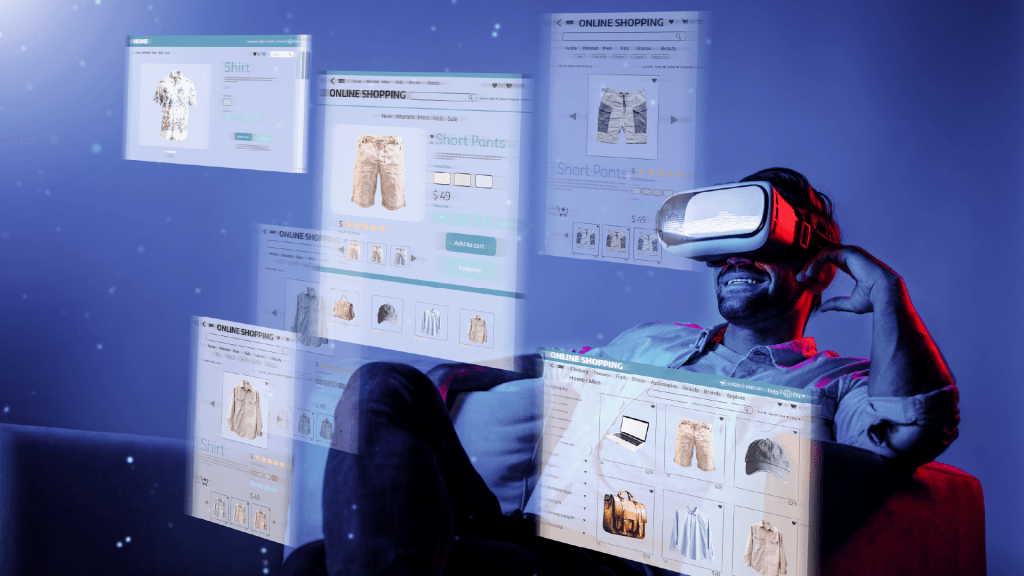
Innovations in technology and retail have given birth to a new phenomenon: the AR try-before-you-buy revolution. Augmented Reality in retail has essentially changed how online consumers view a product, engineering a truly immersive experience that builds buyer confidence, lowers product returns, and boosts conversion rates with AR. It has become a necessity for businesses to offer AR shopping experiences in order to stay competitive in an increasingly digital marketplace.
Marketing Technology Articles:Personalization at Scale: Winning Strategies for eCommerce Brands
What Is the AR Shopping Experience?
With AR shopping, consumers get to visualize products in their own real-world setting with phone cameras, tablets, or AR glasses. From the look of a couch in your living room to virtually trying on sunglasses and testing a lipstick shade against the color of your skin, it all boils down to some great pre-purchase simulation of actual product interaction.
Unlike conventional product photos and videos, AR places a virtual image upon a real-world surface so that the user can check for scale, positioning, and aesthetics with high accuracy. This type of interactive experience gives a concrete form to the sensory gap between physical retail and e-commerce.
The Business Case for AR in E-Commerce
Cutting Down Returns in E-Commerce
How to reduce returns in e-commerce? One of the biggest issues faced by online retailers is their sky-high return rate, with customers returning products because they looked or felt different from what they had expected. AR offers the possibility for shoppers to virtually experience the product, directly addressing this issue to reduce uncertainty and dissatisfaction.
Studies have reported drop rates of 40% in returns for retailers using AR. When consumers feel confident about their choice, they are less likely to buy on a whim or feel remorse over their purchase.
Boosting Conversion Rates
The immersive nature of AR thus does more to prevent returns than to encourage the purchase. According to Shopify, items advertised with AR have a 94% higher conversion rate than those without. In other words, just being able to “try on” or “see” a product in context dramatically increases the engagement, trust, and purchase intent.
AR hurdles common objections, such as doubts about size, fit, or color, by providing the buyer with an experiential preview that translates to fewer abandoned carts and higher sales.
Improving Customer Experience
Retail AR is functional with a twist of fun. This creates design novelty and enjoyment in the customer experience. Customers like to try different products, which increases time spent on-site and deepens brand engagement.
Retailers that implement AR are considered innovators and service leaders, giving them a leg up in the competition. Plus, AR can make even more personalized experiences by identifying, through machine learning, styles or colors that it thinks will fit the user.
Industries Transforming with AR
Fashion and Accessories
AR is employed by brands like Gucci, Warby Parker, and Nike to let clients wear shoes, glasses, or apparel virtually. Thus, improving the VR shopping experience and ensuring sizing accuracy and style confidence in clients.
Furniture and Home Decor
The Place app from IKEA allows users to place virtual furniture in their own homes, taking into consideration room dimensions, lighting, and décor, all of which caused a great reduction in returns and greater user satisfaction.
Beauty and Skincare
L’Oréal and Sephora provide AR makeup try-ons so that consumers can test foundation, lipstick, and eye shadow with facial mapping technologies.
Automotive
Car builds use BMW and Audi versions of AR to allow prospective buyers to configure vehicles in the driveway for a showroom experience at home.
Implementation Strategies for Retailers
Integrate AR into Product Pages
Try embedding the AR functionality right into your product detail pages. For instance, mobile users should be able to tap on a button labeled ‘View in My Space’ or ‘Try It On’ to increase direct engagement with your brand and encourage product conversions.
Use Mobile-Optimized AR
With 70% or so of e-commerce traffic coming from mobile devices, all AR functions need to be fully mobile-optimized.
Partner with AR Platforms
Use third-party platforms like Shopify AR, Snapchat AR, or Google ARCore in order to integrate the try-on feature without needing to build it from scratch. Such platforms provide a great set of tools to developers as well as analytics to understand their success.
Combine AR with Social Commerce
Social platforms like Instagram and TikTok have been supporting filters for AR, allowing users to try products within the app. From an influencer and viral marketing perspective, it is a great blend of fun and commerce.
Provide Virtual Assistance
Integrate AR with AI-powered chatbots or virtual assistants to guide customers through product options, provide recommendations, and resolve issues about fit or compatibility.
AR Analytics: Measuring Its Effect
To keep the ROI of AR features optimized, marketers need very detailed analytics. Key performance indicators include:
- Engagement Time: The duration of interaction users have had with the AR feature.
- Try-On Conversions: Conversion of users who use AR versus conversion of users who don’t use AR.
- Return Rates: Returns data separated among AR purchases and non-AR purchases.
- Customer Satisfaction Scores: Feedback from AR tool users.
Handling the Barriers
Technical Complexity
These services and technologies needed seem to fall outside the domain of most operating businesses. In addition, a retailer needs to invest in developing the necessary infrastructure and promoting AR among employees.
Marketing Technology Articles: From Cookie Crisis to Customer Connection: The First-Party Data Revolution
Device Compatibility
Advanced AR doesn’t perform equally well across consumer devices. It should be ensured by the retailer that its AR works cross-platform.
Privacy and Data Collection
Facial mapping and location-based AR pose privacy concerns. Clear data policies and secure technology solutions must be the basis of maintaining consumer trust.
Cost
The cost of implementing high-quality AR experiences is huge; however, with the evolution of the technology, it will become easier for smaller and mid-tier companies to find affordable solutions.
AR in Retail – What the Future Holds
Future AR in retail is to have much deeper integration with regard to AI and machine learning. Consider an app that allows you to try on a jacket but also recommends accessories based on your wardrobe, budget, and preferences. Expect virtual fitting rooms and smart mirrors to become the norm for both online and in-store experiences.
AR is also to play a central role in sustainability. With fewer returns come lower carbon emissions associated with reverse logistics and less waste resulting from products being unwanted or disposed of.
Other Use Cases and Innovations
Virtual Reality Shopping Experience and AR Malls
Just as with augmented reality, a virtual reality shopping experience is also available. Brands are now experimenting with virtual stores that are 3D environments wherein shoppers are able to browse products and interact with staff avatars. This immersive experience, when juxtaposed with AR product previews, effectively erases the line between digital and physical shopping.
Smart Mirrors and In-Store Integration
AR-enabled smart mirrors are introduced in stores to allow customers to try on clothes virtually without ever having to change. These smart mirrors can recognize the item and recommend complementary ones or suggest sizes and styles, providing a highly personalized and frictionless shopping experience.
Post-purchase Support Using AR
AR in retail is not just limited to the purchase step. Brands are also using AR to enhance the post-purchase experience, providing setup instructions, assembly tutorials, and styling suggestions through AR overlays, which help ease the usage of products and ensure long-lasting customer satisfaction.
AR Democratization for SMEs
What in the past was accessible only to tech giants and large luxury brands is now within the reach of small and medium-sized e-commerce firms. With the likes of Wix, Shopify, and even Canva’s AR integrations, the entrepreneur can produce product visualizations without bearing huge development costs. This democratization sees the AR shopping experience spread across various industries and customer segments.
Conclusion
The AR try-before-you-buy revolution is changing the e-commerce scene by fusing convenience with confidence. Augmented Reality in retail equips customers to make educated decisions, thereby reducing returns and increasing conversions and customer satisfaction along the way.
The technology strengthens with time and ease of access; brands that choose to invest in AR will be able to maintain the delight of their customer while also future-proofing the business in the fast-changing digital economy. The acceptance of the AR shopping experience means not just innovation but the evolution of a smarter, intuitive, and fun-filled path from browsing to buying.