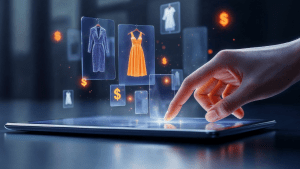
How AI Email Marketing Drives 1:1 Personalization at Scale
Stay updated with us
Sign up for our newsletter

Email still lives on but in a new form. Nowadays, the brands that get the most attention in inboxes are not the ones that send out a loud but bland generic newsletter but rather are the ones that apply AI email marketing to make personalized hand-crafted messages for each customer, and that too at the right moment and with the most suitable offer.
Multiplication of broadcasts into metapersonalization journeys is not an illusion, though. It is the teamwork of machine learning, automation, and intelligence in real-time behavior that makes it possible.
Replacing manual work with AI in email marketing has starkly led to the era of intelligent email marketing automation. Traditional email marketing relied on standard segmentation and scheduled blasts. It worked until consumer expectations changed. Today’s customers expect brands to know them: their needs, timing, interests, and purchasing intent.
Read More: AI-Ready APIs: Connecting E-Commerce Stores to the Next Wave of Automation
That is where intelligent email marketing automation comes into play.
AI tools analyze millions of data points in a matter of seconds, from browsing history down to app engagement, purchase timelines, and content preferences. This allows marketing teams to communicate dynamically and in real-time without having to create endless workflows manually.
AI is not just about email automation. It is about email optimization.
Through machine learning email optimization, brands can:
- Select subject lines most likely to perform automatically
- For each user, predict the best time to send the email
- Personalize product recommendations
- Tailor content blocks according to customers’ behavior
- Mark customers who are at risk of churning
The outcome? It leads to a rise in engagement without adding any human workload.
How AI Turns Standard Email Journeys Into 1:1 Experiences
Personalized AI-enabled email experiences are grounded in human-like personalization aspect. Modern systems are getting it right with the following ways:
1. Predictive Email Personalization
AI applies both behavioral and transactional parameters to guess the exact customer who is the most likely to open, click, or buy.
This comprises the following:
- Anticipating next purchases
- Spotting liked categories
- Interpreting feelings from relations
- Suggesting the best deal
All these factors are very much the predictive email personalization‘s epicenter making every email a personalized micro-experience.
2. Dynamic Content Generated by AI
Rather than doing the tiresome work of producing numerous drafts for an email, AI is in charge of the arrangement of content modules at once.
For instance:
The two clients are sent the “same” email layout. One patron gets fitness gear whilst the other gets skincare packs. That is how data-driven email engagement works.
3. Timing Control and Frequency Guided by AI
Say goodbye to the old method of sending emails guessing when to send them.
AI tells you:
- The “Best hour” for each recipient
- How often to communicate to keep them interested without getting tired
- Period when a customer is most likely to buy
These clever systems cut down on unsubscribes and also increase engagement in the long run.
4. Lifecycle Emails Automation That Changes
Cart abandonment flows, transactional messages, and more, AI enhances each one by constantly learning what works for each individual.
The Impact: What AI Email Marketing Automation Really Does for Teams
With a majority of the brands, the concern is not “Should we use AI?” but rather “Where do we start?” The following is the result of using AI-enabled email marketing tools for personalized campaign adoption by teams:
- Higher engagement: AI is able to figure out the real interests of every single user.
- More sales: The automated system for product recommendations will highlight the items that are most relevant.
- Less manual work: It means no more workflows, no more segmentation busywork.
- Better retention: AI is the one that detects the patterns of loss of the client early on.
- More consistent performance: Machine learning takes care of the whole process of optimization for sending times, content, and intent prediction, making it work like a pro.
To sum it up, AI does the data analysis while marketers do the creative guidance.
Where AI is used in the B2B Email Journey
AI email marketing is not only a significant growth driver for B2C but is also gaining importance in the B2B sector where lead nurturing process will be dependent on right timing and relevance even more.
Lead scoring based on monitoring customer behavior, predicting the right time for prospection, customizing email sequences according to the respective industry, role or intent, and automatically generating personalized content blocks for each prospect are the major applications.
This is the reason why AI email marketing automation for B2B lead nurturing is becoming popular so quickly.
Future Trends: What Could Be the Next Thing for AI-Powered Email Marketing?
We are reaching a scenario where email will not only be automated but will also be programmable, adaptable, and improve by itself.
Here is the trends prevalent in the industry today:
1. AI Agents Taking Over Email Campaigns
The future tools will:
- Create the email
- Dynamically segment
- Content and run experiments
- Refine the whole strategy
- The input will be very small, but the output will be very large.
2. Hyper-Granular Personalization
The AI will not only tell customers that “people like you have bought X,” but also base personalization on:
- Up-to-date behaviors
- Interactions through different devices
- Feeling sentiment
- Buying psychology
Read More: Smarter Storefronts: How AI Search Optimization Boosts Product Discovery
3. Unified AI-Powered Personalization Across Channels
Email will not be an isolated channel. AI will align the personalization across SMS, apps, WhatsApp, and on-site messaging.
4. Predictive Personalization Becomes the Default
No more guessing by marketers. AI will predict results accurately.
This is the future of AI in email marketing automation and analytics for email, where the three components of data, predictions, and creativity meet.
Conclusion
The brands that are going to be able to ask for a bigger share of email space in the future are not those that shout the most but those that are cleverer.
They do not send more but rather better by using AI.
With the help of AI-powered insights, predictive personalization strategies in AI email marketing, intelligent automation, and adaptive content, email turns into a 1:1 communication channel full of power, regardless of the size of the audience.
Write to us [wasim.a@demandmediaagency.com] to learn more about our exclusive editorial packages and programmes.