How AI-BI Partnerships Are Fueling Predictive Insights in Retail and E-Commerce
Stay updated with us
Sign up for our newsletter
The emergence of AI and BI together is endangering the retail and e-commerce playbook. While AI handles automation and provides learning and predictive power, BI gives the quintessential structure to organize data, visualize it, and finally, make an executive decision. AI-BI partnership now provides retailers with predictive insights to foresee trends, maximize operations, and personalize customer experiences on a large scale.
The AI-BI Synergy: From Data to Decisions
For years, retailers have drawn so much data across POS systems, e-commerce transactions, and CRM tools. Yet, the challenge was not that they lacked enough data; it was the extraction of insights. Here’s where AI-aided BI comes in. With the help of ML algorithms working across BI dashboards, companies can find patterns of buying behavior, predict demand, and even automatically adjust price or promotion for some very specific customer bases.
Marketing Technology News: Adams Outdoor Advertising Acquires Scotty Outdoor, Adding 132 Billboards in the Carolinas
For example, AI-driven BI tools such as Tableau GPT, Microsoft Fabric, and Looker with Gemini AI are turning once static data visualization into conversational insights, whereby marketing and operations teams are relieved of manual querying of dashboards and can just ask, “Which products will see the highest demand next quarter?” and get data-backed forecasts in seconds.
Predictive Analytics in Retail: Seeing Tomorrow’s Demand
Predictive analytics, in cooperation between AI and BI, enables businesses to identify changes in demand far before stock or price is involved. Retailers can now forecast product demand according to seasonality, promotion, and local events, as well as ascertain buying intent by studying browsing behavior, sentiment, and cart activity to reduce overstocking and shortage using dynamic replenishment models.
Apparel brands, for example, use predictive AI-BI models to align production with social media trends. When demand spikes driven by an influencer are detected, automated BI dashboards alert to restocks and optimize routing of fulfillments in real-time.
Personalized E-Commerce Experiences at Scale
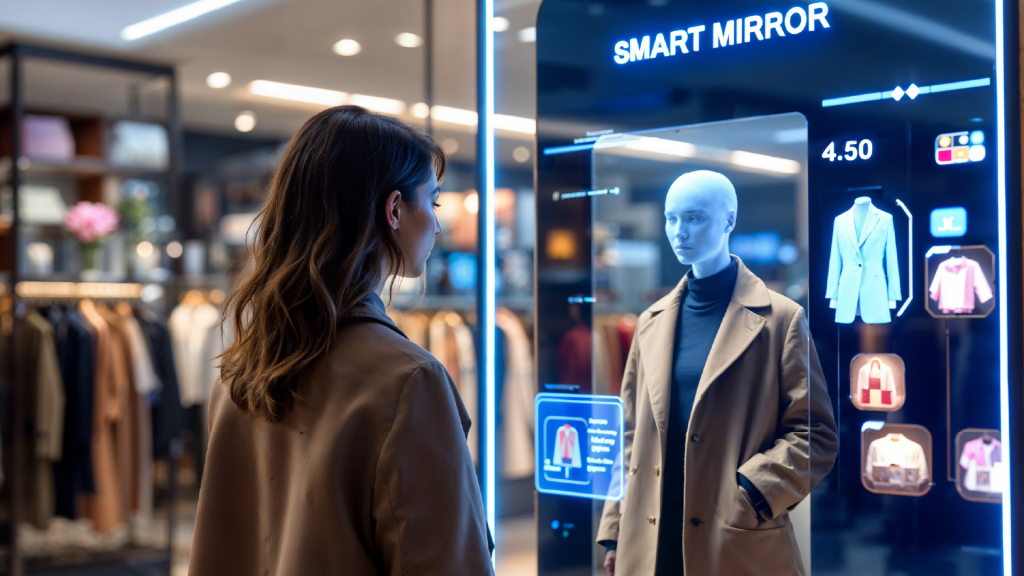
Personalized commerce has ushered in a new era, of which AI-BI systems form the backbone. Whereas BI tools centralize data coming from sources such as the web, app, social, and in-store, AI interprets this data to create an individualized experience.
Retailers can segment consumers based not just on classical demographics, but on predictive behavioral profiles. For example, if BI indicates a particular past purchase cycle for a customer, AI systems could complement this by proactively recommending complementary products or redeeming discounts exactly when the customer is most likely to accept.
Marketing Technology News: Global Relay Announces Compliant Voice Solution with Votacall
The upshot is that conversion rates grow as much as 25%, with customer retention being much improved as a result of relevant data-driven engagement.
Dynamic Pricing and Profit Optimization
Dynamic pricing has traditionally been the richest tool in e-commerce. With AI-BI integration, the concept is now far more refined. Based on real-time data streams of competitor prices, weather patterns, and even sentiment analysis of reviews, AI models lay out the most suitable pricing techniques. BI then places those insights in higher contexts for decision-makers by means of dashboards.
This means that grocery retailers can price perishables by the hour, whereas fashion labels ensure that a discount at their merchandising center flows all the way down to all external marketplaces where it is being displayed and promoted. This earns margin protection trust for customers through a singularly consistent and transparent pricing experience.
AI-BI in Supply Chain Optimization
AI-BI collaborations already offer a change for logistics and fulfillment beyond front-end marketing. Predictive BI reports, along with AI-optimization tools, are assisting retailers in cutting down last-mile delivery costs and managing relationships with suppliers more effectively.
For instance, a BI dashboard informs the user of late shipments, to which AI directs the “why” and “what next” by recommending alternate routes or vendors on the basis of predictive reliability scores. This level of agility allows for e-commerce operations to stay resilient even in situations of volatile market conditions.
Ethical Data and Responsible AI-BI Integration
With the ever-increasing range of predictability, controlling the growth of such developments ethically becomes crucial. Retailers will be happy to commit to their data privacy, transparency of models, and equity in automated decision-making.
Modern AI-BI tools also come embedded with an explainability module, going on to show how a prediction was generated, so that teams are confident working with their analytics pipeline while reinforcing consumer trust.
The Competitive Edge of Real-Time Predictive Intelligence
By 2026, winners in retail will be defined by real-time predictive intelligence. Traditional BI gave companies a rearview mirror; AI-BI partnerships now provide a forward-facing radar. Retailers embracing this synergy would find switching extremely easy, launching personalized campaigns, dynamically adjusting stocks, and prices in the face of trending narratives.
With global AI-BI collaborations such as Eva Live and Eightpoint’s partnership, we’re witnessing the next evolution in retail analytics: intelligent ecosystems capable of predicting and shaping consumer behavior before it happens.
Conclusion
In a nutshell, AI-BI partnerships aren’t just making e-commerce smarter; they’re making it anticipatory. By joining human intuition with machine precision, businesses can now realize responsiveness at levels once thought impossible. Retailers that grab hold of this predictive edge now will go on to form the consumer experience of the future.